Skip to content

IDEAS Science Nonprofit · Technology Transfer

From validated research,
to collaborative deployment.

IDEAS Next is the technology transfer vehicle of IDEAS Science Nonprofit. We bring a validated portfolio of deep-tech research — detection, measurement, biosurveillance — into practical deployment through structured partnerships and an open innovation and shared source model.

8+
Years of R&D at IDEAS Science
5
Measurement platforms in portfolio
TRL 3–6
Portfolio readiness range

A research team
entering the market.

IDEAS Science Nonprofit has built a focused research portfolio around a single problem domain: detecting and monitoring radiological, biological, and chemical threats rapidly enough to be operationally relevant. That work — laboratory development, field validation, iterative refinement with end users — has produced a portfolio of measurement platforms with demonstrated technical foundations.

IDEAS Next b.v. was established as the formal technology transfer vehicle for this body of work. Our function is to take validated research outputs, define the remaining development pathway, and bring them to deployment in collaboration with external partners who contribute the capabilities we do not hold ourselves.

We operate under an open innovation and shared source model: platforms are built with documented interfaces and open standards so that sensor manufacturers, AI laboratories, diagnostic developers, and research institutions can integrate directly — with source code access structured around active co-development relationships.

European Research Consortium Participation
We coordinate and participate in European research consortia, bringing our platforms into collaborative R&D frameworks alongside academic, industrial, and public-sector partners. This gives our development work access to broader validation environments, co-funding structures, and the stakeholder networks that accelerate the path from TRL 4 to deployment-ready TRL 6–7.
Transfer & Exploitation
Field-validated technologies require exploitation strategies that go beyond technical reports. We prepare platforms for industrial integration, licensing arrangements, or the formation of independent spin-off companies depending on what each technology requires.
Open Ecosystem Architecture
Our platforms are built with open interfaces. CBRN equipment vendors, AI laboratories, and research groups can integrate their own modules — spectroscopy, classification, biosensing — without requiring custom integration work at the platform level.

How development
proceeds.

Technology transfer from research is rarely a linear process. IDEAS Next manages three interconnected activities — portfolio ownership, collaborative co-development, and market preparation — that run in parallel rather than in sequence. Across all three, we operate an open innovation model: selective access to interfaces, modules, and source code, structured around working relationships rather than classical licences.

Portfolio Incubation & R&D Management
We take institutional ownership of technologies originating in IDEAS Science's research portfolio. This involves defining the remaining technical milestones, establishing the IP framework, and assigning the management structure necessary to engage external partners. We bring these platforms into European research consortia — alongside academic, industrial, and public-sector partners — to access broader validation environments, co-funding structures, and the stakeholder networks that accelerate development. The starting point is always a validated research asset, not a concept.
Collaborative Co-Development
No single organisation holds every capability that complex detection and monitoring platforms require. We actively engage technology SMEs, academic laboratories, and hardware manufacturers to address specific technical gaps — integrating their sensors, AI models, or software components into our platforms. Our platforms are built with open interfaces: CBRN equipment vendors, AI laboratories, and research groups can connect their own modules without requiring custom integration work at the platform level. Co-development agreements are structured around clear milestones and defined IP positions from the outset. Platform APIs and data schemas are publicly documented; core source code is accessible to active co-development partners under a source-available, collaboration-based licence.
Market Preparation & Exploitation
Validated technology still requires a defined path to users. Field-validated platforms need exploitation strategies that go beyond technical reports: we prepare each platform for the route that fits it — industrial integration, licensing arrangements, or the formation of an independent spin-off company. We develop go-to-market frameworks with intended user groups — first responders, public health laboratories, environmental agencies — and structure outcomes accordingly.

Our model sits deliberately between fully open and fully closed. Selected modules are published under open licences; core platform source code is accessible through co-development agreements, not public download. Interface specifications are public — integration can begin before a formal relationship is in place, but deeper access is tied to a working collaboration.

"The interface specification is public. The source code is available to those who are building with us — not as a download, but as part of a working relationship."

Open interfaces
Platform APIs and data schemas are publicly documented. Any organisation can design integrations against the specification without a prior agreement.
Open-source modules
Selected processing, classification, and analysis components are published under open licences — specific, bounded contributions to the broader research community.
Collaborative source access
Core platform source code is accessible to co-development partners under a source-available, collaboration-based licence — structured around active working relationships rather than open download.

The ZcanFamily.

Five platforms developed from IDEAS Science's research programme. Each addresses a distinct detection or monitoring problem in CBRN response, public health, or environmental management — areas where the absence of timely, accurate data carries direct operational consequences.

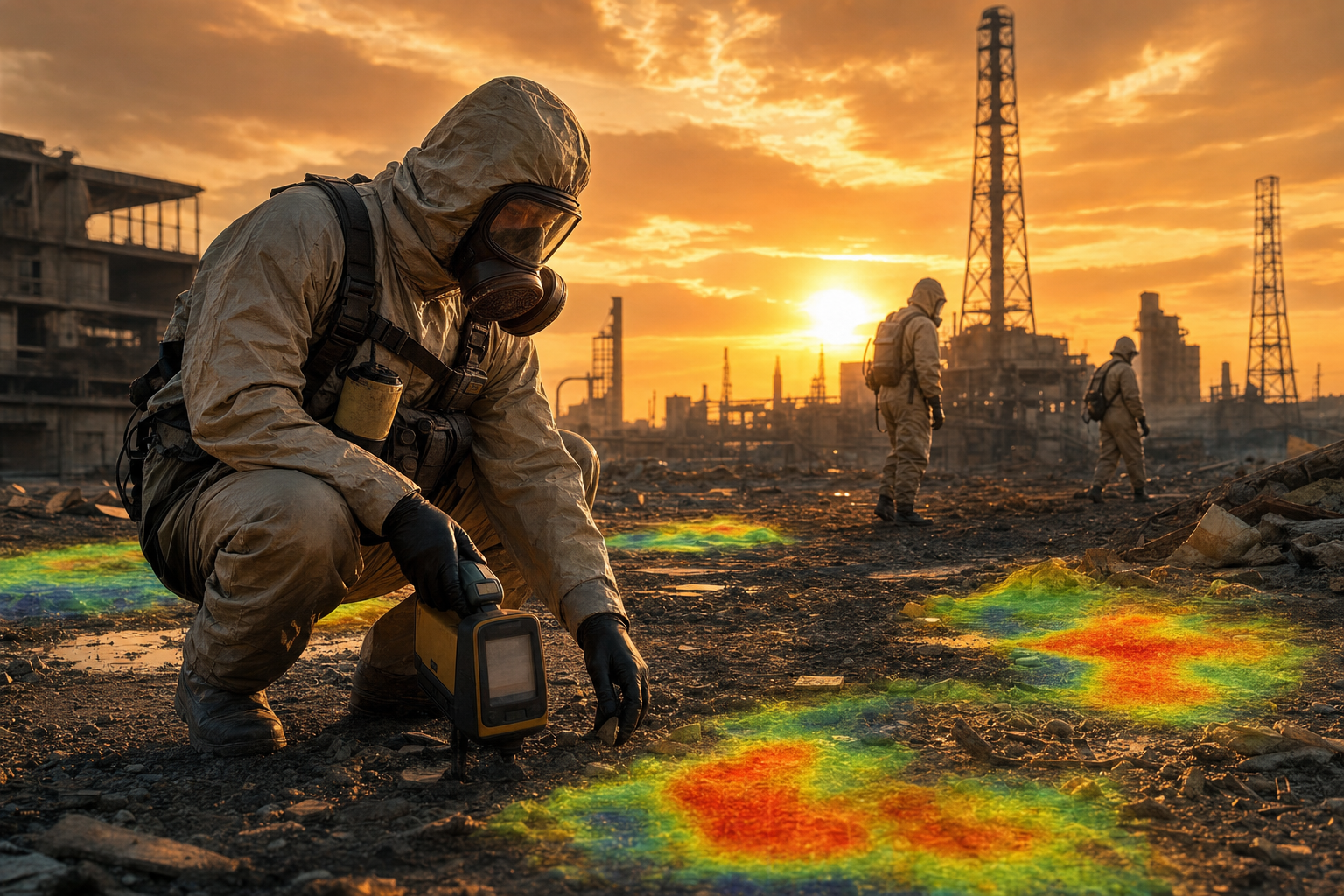
CBRN radiation survey team with aerial heatmap overlay
RadiZcan
Aerial Radiation Survey & Monitoring

Helicopter- and UAV-mounted radiation detection for emergency response, nuclear facility surveillance, and long-term contaminated area monitoring. Provides real-time gamma spectrum analysis, dose rate measurement, radioisotope identification, and geographic data integration in a fully automated airborne configuration.

RadiZcan-POD (helicopter) RadiZcan-MOB (UAV/robot) Spectroscopy & mapping SW
CBRN units Civil defence Nuclear operators Emergency coordinators TRL 6
Microscope with holographic sample in warm laboratory light
HoloZcan
Rapid Bio-Aerosol Detection

A portable, autonomous detection system combining Digital Holographic Microscopy with deep learning to identify and classify airborne biological particles in real time. Field-demonstrated at large-scale venues including stadium pilot deployments. The core DHM and deep learning detection engine is validated — the current phase concerns exploitation strategy, industrial integration, and commercial spin-off formation.

Current focus Exploitation strategy · Industrial integration · Spin-off framework
CBRN specialists Public safety agencies Event security TRL 6 · Spin-off Readiness
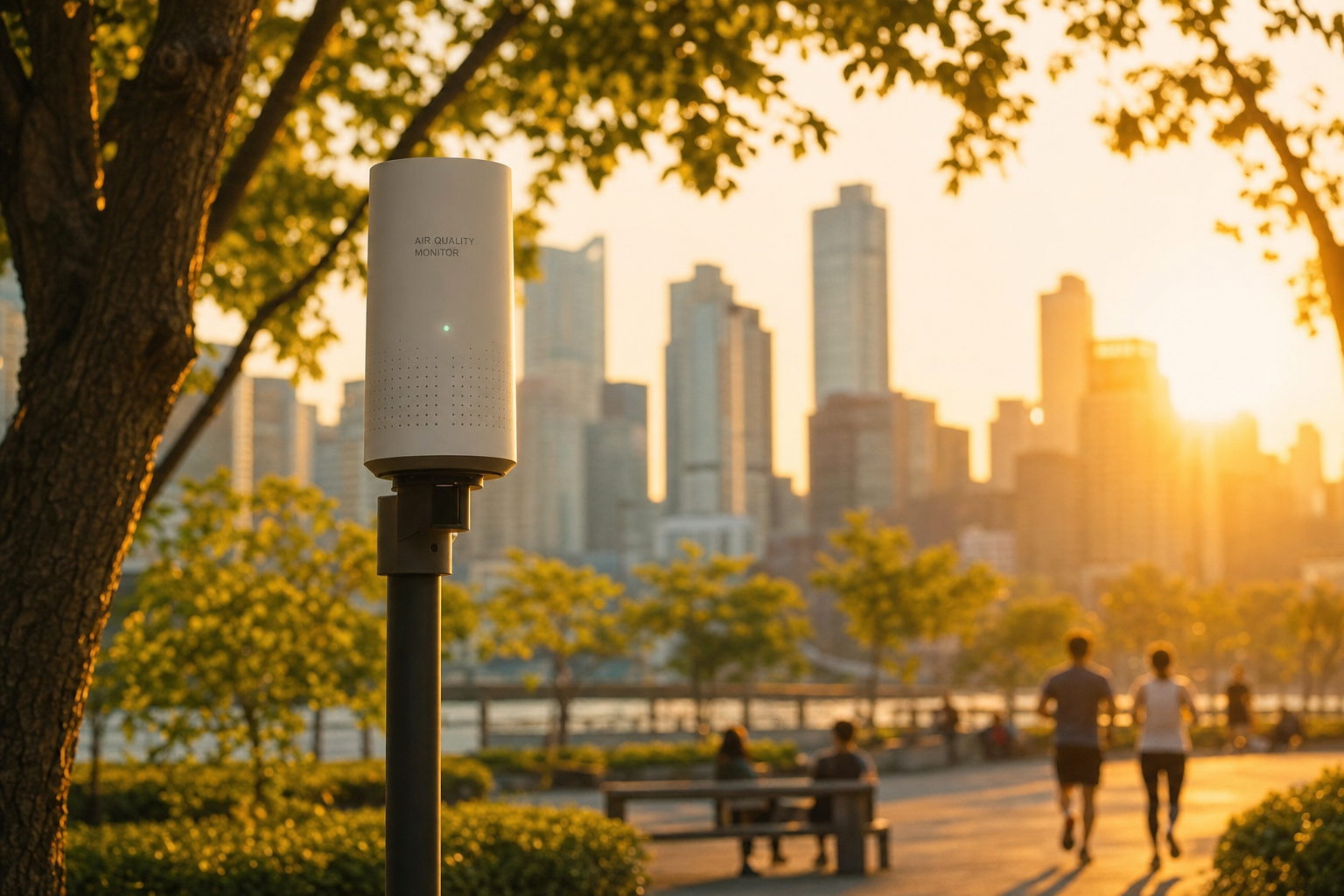
Air quality sensor on pole at golden hour with city background
MoxyZcan
Atmospheric Air Quality Analysis

Real-time measurement and characterisation of atmospheric chemical composition. Designed for field deployment in urban, industrial, and emergency-response contexts. Full specifications and application data will be published as the platform advances through its current development phase.

Environmental agencies Industrial operators Public health labs TRL 4
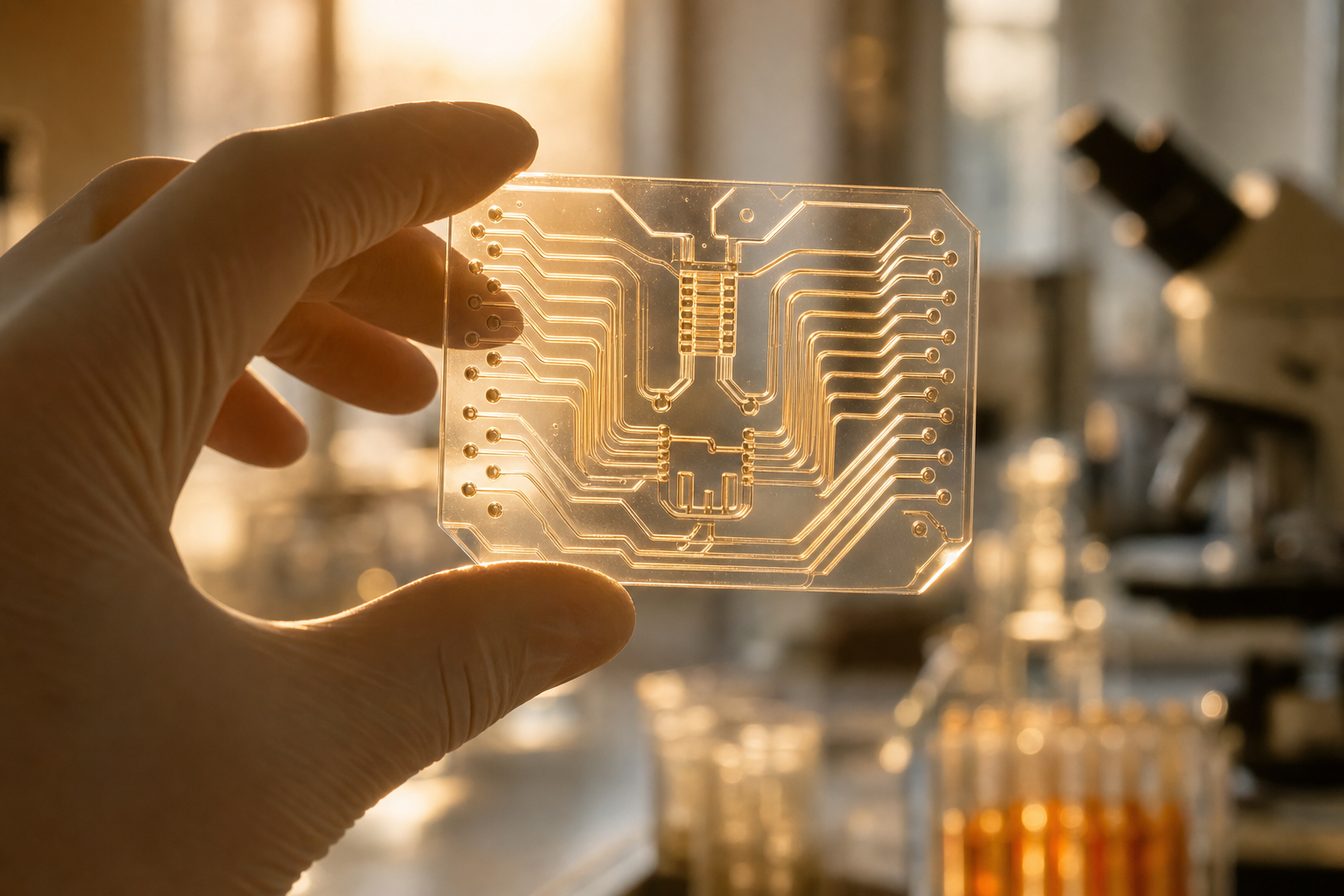
Microfluidic chip held to light with golden backlight
CameloZcan
Continuous Biosurveillance Platform

A lab-on-film architecture that bridges optical sensing and molecular diagnostics using NIR camelid nanobodies. The detection concept is validated at laboratory scale. The current phase addresses the roll-to-roll film architecture and open-interface specification — enabling external sensor and diagnostics developers to integrate without reconstructing the platform layer.

Current focus Film architecture · Open-interface specification · Partner recruitment
Research institutions Diagnostic labs Module developers TRL 4 · Co-Development
European city square aerial view in warm afternoon light
CityZcan
Urban Environmental Monitoring

A networked platform for distributed environmental sensing across urban areas. Designed to integrate measurement outputs from multiple Zcan units into a unified situational awareness layer for municipal authorities, civil protection agencies, and public health management at city scale.

Municipal authorities Civil protection Urban planners TRL 3

Advanced development
platforms.

Two platforms in the ZcanFamily are at or approaching deployment readiness, with active co-development and exploitation activities underway.

HoloZcan — holographic microscopy in warm lab environment
TRL 6 Spin-off Readiness
HoloZcan
Rapid Bio-Aerosol Detection

The core DHM engine and deep learning classification stack are validated through field deployments at large-scale public venues, including stadium pilot programmes. The detection performance is established — the current phase is entirely concerned with the transition to commercial deployment: exploitation strategy definition, industrial integration pathway, and the formation of an independent spin-off company to carry the technology to market.

Current focus

Exploitation strategy · Industrial integration · Spin-off formation

CameloZcan — microfluidic film architecture in golden backlight
TRL 4 Co-Development Phase
CameloZcan
Continuous Biosurveillance Platform

The current phase addresses the roll-to-roll film architecture and open-interface specification — enabling external sensor and diagnostics developers to integrate without requiring reconstruction of the platform layer from the ground up.

Current focus

Film architecture development · Open-interface specification · Co-development partner engagement

Who we work
with.

IDEAS Next's development model depends on external partners who bring specific capabilities into active co-development arrangements. We are not looking for general expressions of interest — we are looking for organisations with concrete technical contributions to make to one of the platforms below.

Technology SMEs & Spin-outs
Organisations developing sensor hardware, microfluidics components, AI-based classification models, or signal processing tools. If your product is compatible with open-standard interfaces, there may be a defined co-development scope to explore.
Universities & Research Institutes
We carry real, unsolved technical problems in spectroscopy, digital holography, biodetection, and atmospheric chemistry. Academic groups with relevant expertise are invited to discuss structured research collaboration with defined deliverables and IP positions.
Industrial Partners & Investors
HoloZcan is approaching spin-off readiness following field validation. Organisations with interest in acquiring, licensing, or investing in a validated bio-aerosol detection platform are invited to initiate a technical and commercial discussion.

Start a
conversation.

Tell us what your organisation works on and where you see a potential intersection with one of our platforms. We aim to respond within two working days.

Location
Torenallee 26-22, 5617BD Eindhoven, The Netherlands